Description:
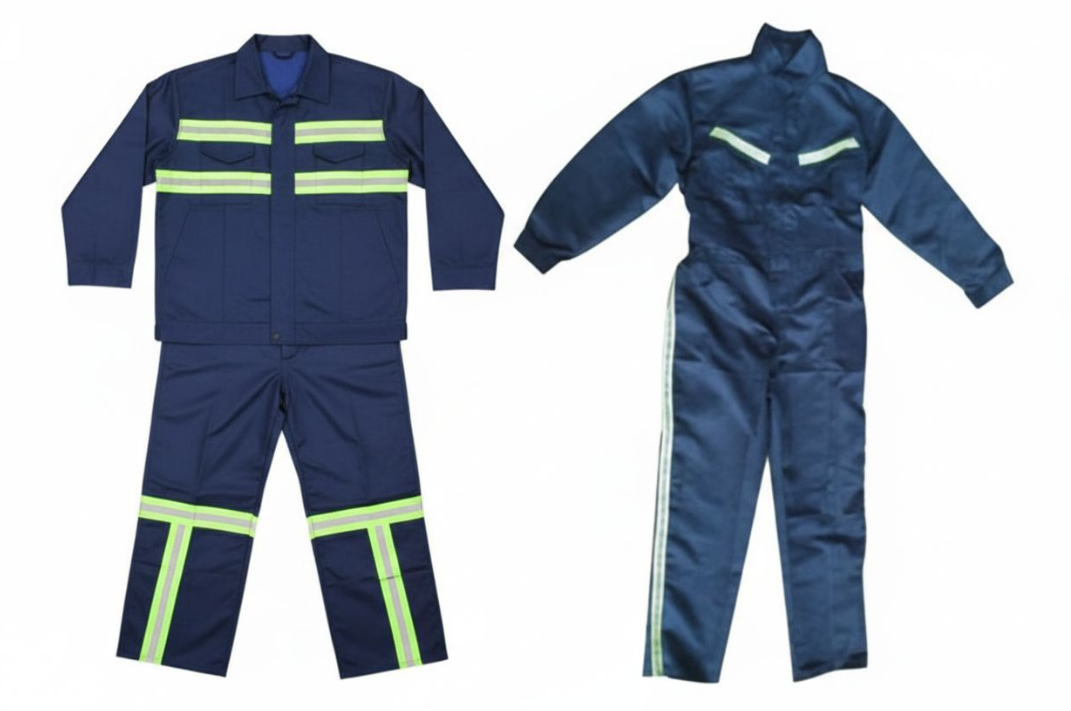
An overall, also known as Coveralls, is a one-piece protective garment designed to cover most of the body, including the torso, arms, and legs. It is commonly made from durable materials such as cotton, polyester, or specialized fabrics that may be resistant to chemicals, heat, or dirt. Overalls are widely used by workers in industries such as construction, mechanical workshops, agriculture, and manufacturing to protect clothing and skin from dust, grease, spills, and other hazards. They may include features like pockets, zippers or buttons, elastic cuffs, and reinforced stitching for durability.
Operation:
The operation of an overall is based on providing full-body protection and convenience during work activities. When worn, it acts as a barrier between the worker’s body (and regular clothing) and the working environment, preventing exposure to dirt, harmful substances, and minor physical hazards. The one-piece design ensures complete coverage and reduces the chance of contaminants entering through gaps in clothing. Fastening systems such as zippers or buttons secure the garment, while breathable materials allow comfort during extended use. This helps maintain cleanliness, safety, and efficiency in various work conditions.