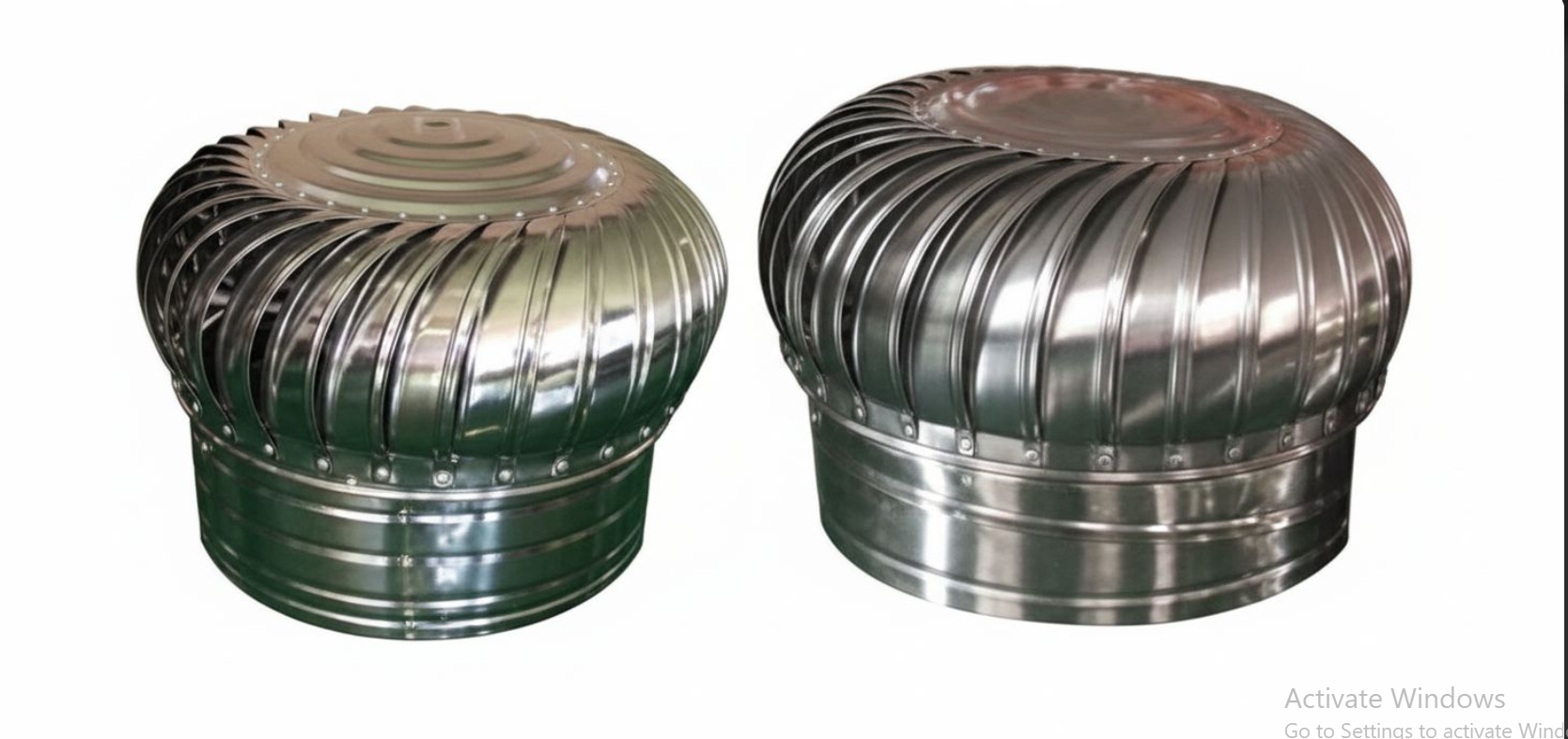
A roof turbine ventilator, commonly known as a turbo ventilator or whirlybird ventilator, is a mechanical air-extraction device installed on rooftops to improve indoor air circulation. It is typically made of lightweight metal or aluminum with a dome-shaped base and a set of curved fins or blades mounted on a spindle. The design allows it to sit at the peak of a roof where hot air naturally rises. It operates without electricity and relies on wind energy and natural convection.
Operation: The ventilator works by using wind and temperature differences between indoor and outdoor air. When wind blows over the curved fins, it causes the turbine to rotate, creating a suction effect that pulls hot, stale air out of the building. At the same time, cooler fresh air is drawn in through lower openings such as windows or vents. Even when there is little or no wind, the temperature difference between warm indoor air and cooler outside air continues to drive airflow upward, maintaining ventilation. This continuous air exchange helps reduce heat buildup, moisture, and odors inside buildings such as warehouses, factories, and residential houses.