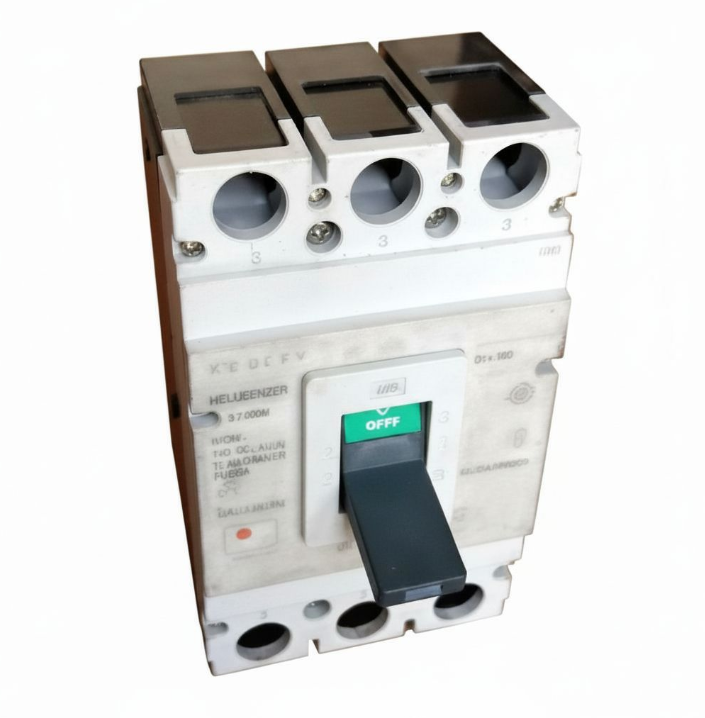
Description:
An isolator, also known as a Disconnect Switch, is a mechanical switching device used to completely disconnect a part of an electrical circuit from the power supply for safety purposes. It is designed to ensure that a circuit is fully de-energized so that maintenance or repair work can be carried out safely. Isolators are typically installed in distribution boards, substations, and industrial electrical systems. They do not have arc-quenching capability and are therefore operated only when the circuit is not carrying current. The device usually consists of fixed and moving contacts, an operating handle or mechanism, and insulating supports.
Operation:
The operation of an isolator is simple and manual (or sometimes motor-operated). First, the circuit breaker or load switch is turned off to stop the flow of current. Then, the isolator is opened to physically separate the contacts, creating a visible gap that confirms the circuit is completely disconnected. This visible disconnection is important for safety during maintenance. When restoring power, the isolator is closed first to reconnect the circuit, and then the circuit breaker is turned on to allow current to flow. This sequence ensures safe and proper operation without causing electrical arcs or damage to equipment.

400 Amps