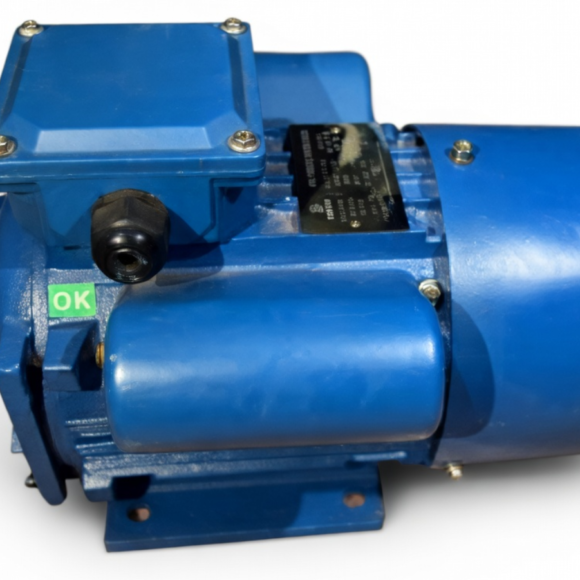
A three-phase (3P) induction motor is an electromechanical device that converts three-phase alternating current (AC) electrical energy into mechanical rotational energy. Its technical architecture consists of two primary components: a stationary outer stator and a rotating inner rotor, separated by a small, uniform air gap. The stator houses three separate sets of insulated copper windings spaced 120 electrical degrees apart around its core, which are connected to a three-phase power supply. The rotor is typically a “squirrel cage” design, constructed of longitudinal conductive bars short-circuited at both ends by metal rings, all housed within a laminated steel core to minimize energy losses from eddy currents.
Operation relies entirely on the principles of electromagnetism and electromagnetic induction. When three-phase AC power flows through the stator windings, the 120-degree phase shift between the currents creates a Rotating Magnetic Field (RMF) that rotates at a synchronous speed determined by the supply frequency and the number of magnetic poles. As this RMF sweeps across the rotor bars, it cuts through them and induces a voltage, generating a secondary magnetic field in the rotor. According to Lenz’s Law, the rotor’s magnetic field opposes the stator’s change in magnetic field, creating a powerful mechanical torque that forces the rotor to spin in the same direction as the RMF. Because the rotor must always spin slightly slower than the synchronous RMF to maintain this induction effect, this speed difference is known as slip, which varies automatically to match the mechanical load applied to