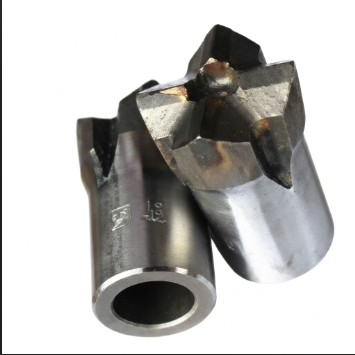
Technical Description: Drilling rods are long, cylindrical steel tubes used to transmit rotational force, torque, and drilling fluid between the drilling machine and the drill bit. They form a critical part of drilling assemblies in applications such as water well drilling, geotechnical investigations, mining exploration, oil and gas drilling, and construction foundation works. Drilling rods are manufactured from high-strength alloy steel to withstand high torsional stress, axial loads, and bending forces during drilling operations. They are typically threaded at both ends to allow secure connection between multiple rods, enabling deep penetration into the ground. Depending on the application, drilling rods may be solid or hollow, with hollow types allowing circulation of drilling mud or air to cool the bit and remove cuttings from the borehole.
Operation: During operation, the drilling rod is connected to the drill rig’s rotary head or top drive system and to the drill bit at the lower end. As the machine rotates, torque is transmitted through the rod to the bit, enabling it to cut through soil, rock, or other subsurface materials. In hollow rod systems, drilling fluid (mud, water, or air) is pumped through the rod to the drill bit, where it cools the bit and carries cuttings back to the surface through the annular space between the rod and borehole wall. As drilling progresses, additional rods are added (rod by rod) to increase depth. After reaching the required depth, the rods are withdrawn carefully in reverse sequence. Proper alignment, lubrication of threads, and regular inspection for wear or damage are essential to ensure efficient drilling performance and prevent equipment failure.