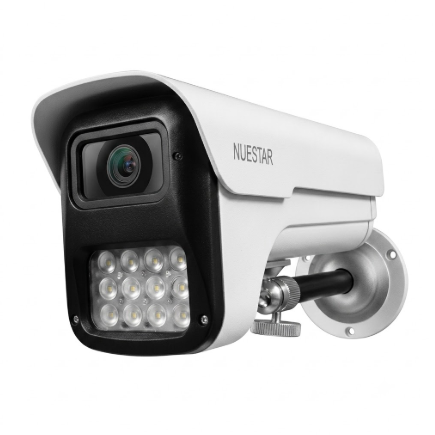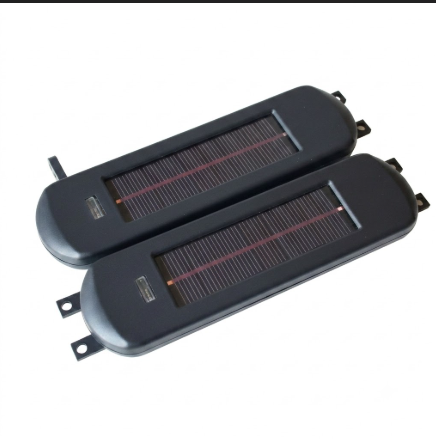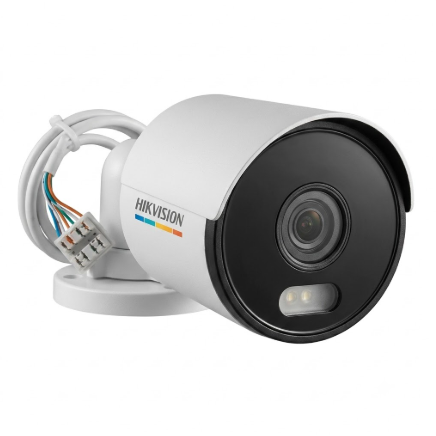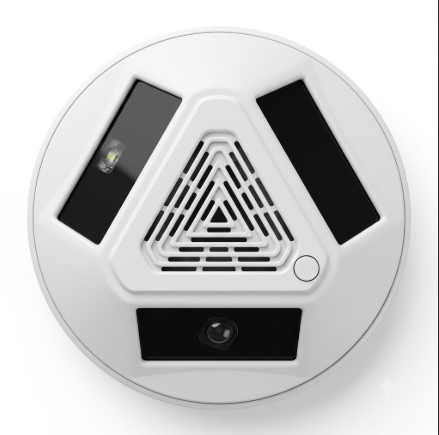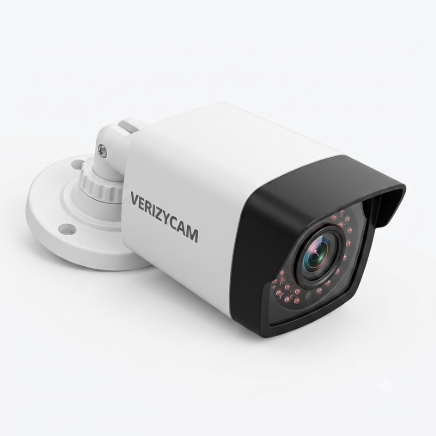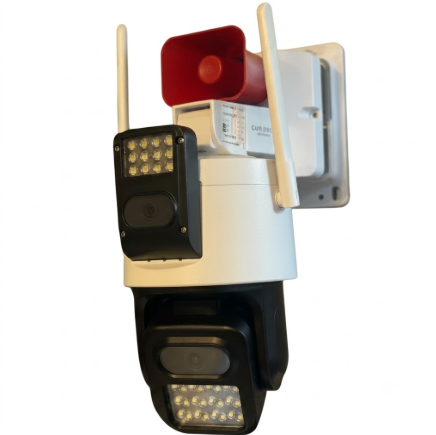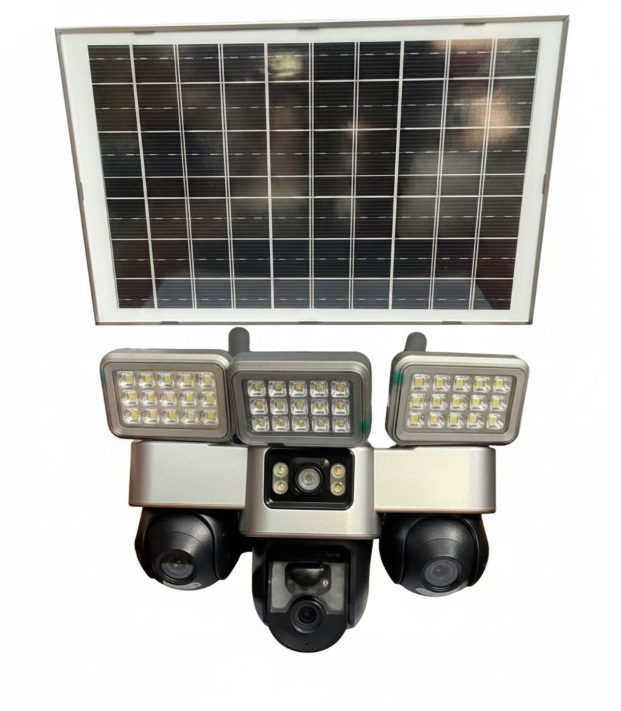
A solar camera is a wireless surveillance camera powered by solar energy, designed for security monitoring in locations where electricity supply is limited or unavailable. It is commonly used on farms, construction sites, remote homes, roads, and outdoor facilities. The system typically consists of a camera unit (with lens and image sensor), a solar panel, a rechargeable battery, a controller, and connectivity features such as WiFi or cellular (4G/5G). It may also include infrared LEDs for night vision, motion sensors, and a storage system (SD card or cloud).
In operation, the solar panel captures sunlight and converts it into electrical energy, which is stored in the rechargeable battery. This stored energy powers the camera continuously, even at night or during cloudy conditions. The camera records video through its lens and processes it digitally, then transmits the footage wirelessly to a mobile device or cloud server for remote viewing. Many solar cameras use motion detection to start recording only when movement is detected, conserving power and storage. Infrared LEDs enable recording in low-light or dark conditions. Solar cameras are valued for their energy independence, easy installation (no wiring), and reliable performance in off-grid environments.