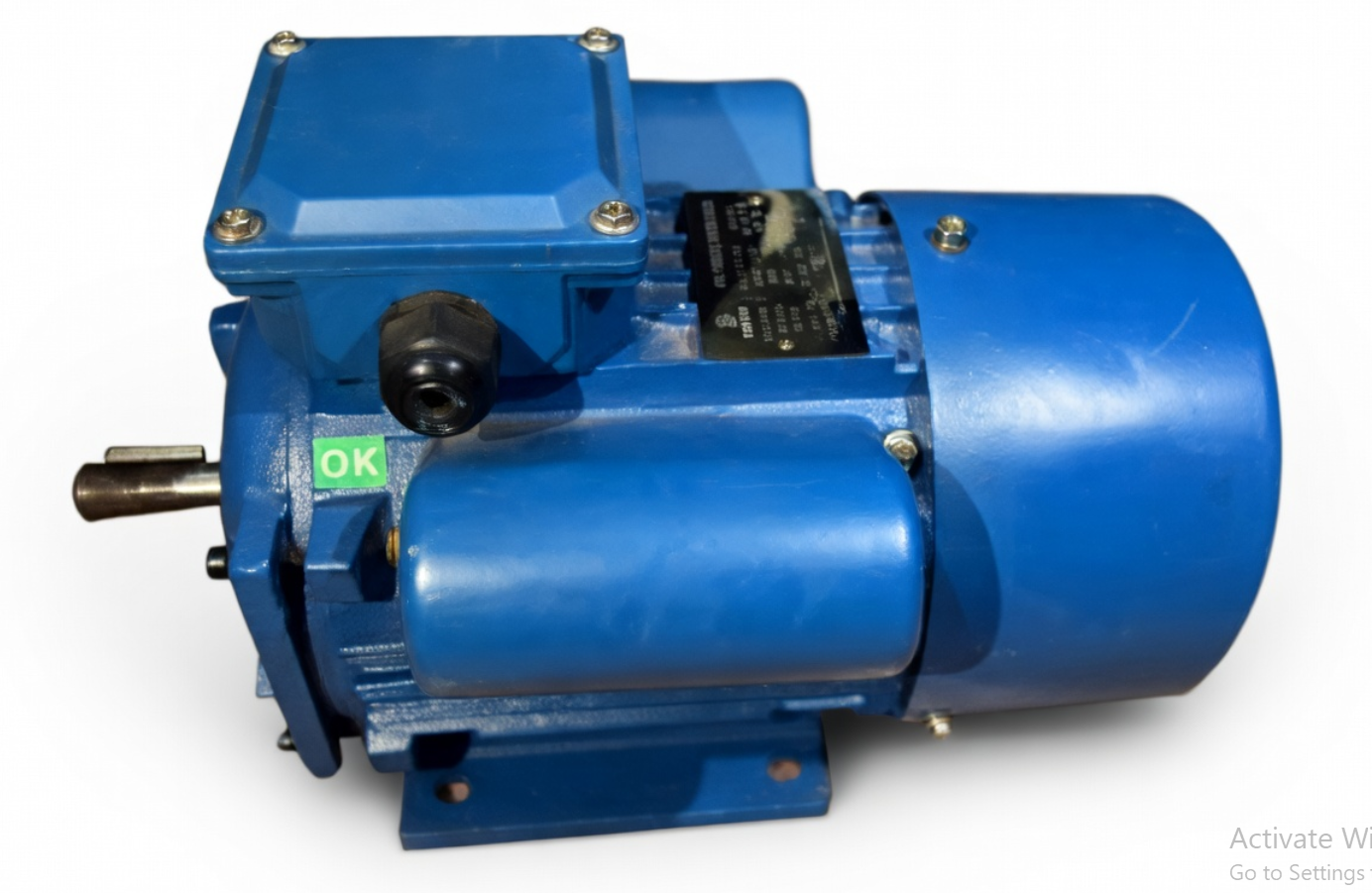
A single-phase (1P) AC induction motor is an electromechanical device that converts alternating current from a single-phase power supply into mechanical rotational energy, commonly used in domestic and light-industrial applications. Its technical architecture consists of a stationary stator and a rotating rotor, typically of a squirrel-cage design identical to a three-phase motor. However, unlike a three-phase motor, the stator of a single-phase motor contains a main running winding and an auxiliary starting winding wound 90 electrical degrees apart. Because a single-phase AC supply flowing through a single winding produces a pulsating magnetic field rather than a naturally rotating one, the auxiliary winding is paired with a starting capacitor or a centrifugal switch to create a artificial phase shift, establishing the initial torque needed to break the rotor’s inertia.
Operation begins when alternating current is applied to both the main and auxiliary windings, creating a phase-displaced, rotating magnetic field (RMF) that induces a current within the conductive bars of the rotor. This induced current generates a secondary magnetic field that interacts with the stator’s RMF, producing the mechanical torque that accelerates the rotor shaft. Once the motor spins to approximately 75% to 80% of its rated synchronous speed, a mechanical centrifugal switch clicks open (or an electronic relay engages) to disconnect the auxiliary starting winding and capacitor from the circuit. The motor then continues to run efficiently using only its main winding, with the rotor constantly chasing the pulsating magnetic field at a slightly slower speed known as slip, automatically adjusting its internal electromagnetic induction to match the mechanical load on the shaft.