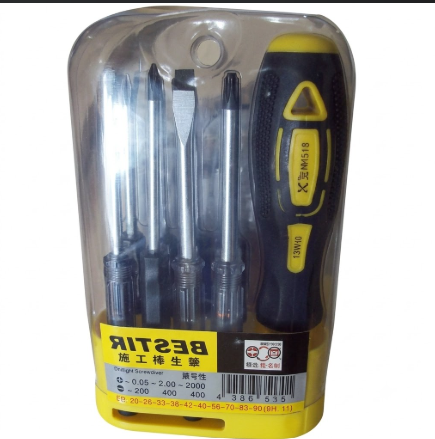
A screw is a threaded mechanical fastener used to join two or more materials securely by converting rotational force into linear holding force. It is manufactured from high-strength materials such as carbon steel, stainless steel, brass, or alloy steel, and is available with various protective finishes including zinc plating, galvanizing, or black oxide coating to improve corrosion resistance. A screw typically consists of a head, shank, helical threads, and a pointed or blunt tip, with head designs such as Phillips, slotted, Pozidriv, Torx, hex, or socket head depending on the intended application. Screws are widely used in construction, woodworking, metal fabrication, machinery assembly, automotive repair, electrical installations, and general maintenance due to their strong holding power and ease of installation and removal.
Operation
To use a screw, select the appropriate type, size, and length based on the material and load requirements. Align the materials to be joined and, where necessary, drill a pilot hole of the recommended diameter to prevent splitting or improve installation. Insert the screw into the hole and tighten it by rotating clockwise using a suitable screwdriver, spanner, or powered screw-driving tool until the head is firmly seated against the surface. Avoid excessive tightening, as over-tightening may strip the threads or damage the material. To remove the screw, rotate it counterclockwise using the appropriate tool until it is completely withdrawn. Periodically inspect screws in structural or mechanical assemblies for signs of loosening, corrosion, or wear, and replace any damaged fasteners to maintain the integrity and safety of the assembly.