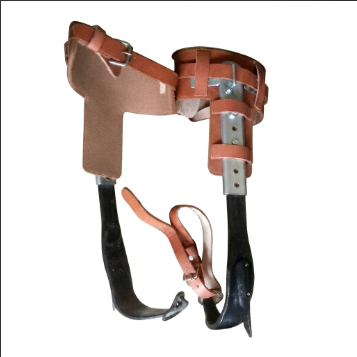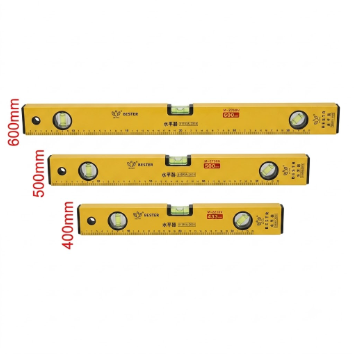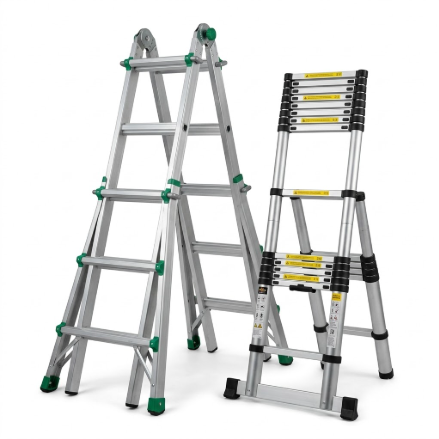
Technical Description: A ladder is a vertical or inclined access equipment used to enable safe movement between different heights for construction, maintenance, inspection, and general access work. It consists of two vertical side rails connected by evenly spaced horizontal rungs or steps. Ladders are manufactured from materials such as aluminum, steel, fiberglass, or wood depending on strength requirements, electrical safety considerations, and working environment. They are available in various types including step ladders, extension ladders, fixed ladders, and folding ladders. Fiberglass ladders are commonly used in electrical environments due to their non-conductive properties, while aluminum ladders are preferred for their lightweight strength and portability. Ladders are designed with safety features such as anti-slip feet, locking mechanisms, and stabilizing braces to reduce the risk of slipping or collapse.
Operation: To operate a ladder safely, it is first inspected for defects such as cracks, loose rungs, or bent rails before use. The ladder is then placed on a firm, level, and non-slippery surface, ensuring the correct angle of inclination (commonly the 4:1 ratio for extension ladders). For extension ladders, the sections are raised and securely locked into position before climbing. The user ascends and descends facing the ladder while maintaining three points of contact (two hands and one foot or two feet and one hand) at all times. Tools should be carried using tool belts or hoists rather than by hand to maintain balance. After use, the ladder is lowered, cleaned, and stored in a dry area away from environmental damage. Proper handling, inspection, and correct positioning are essential to prevent falls and ensure safe operation.